
Article
What is affected by the density of silicone insulation
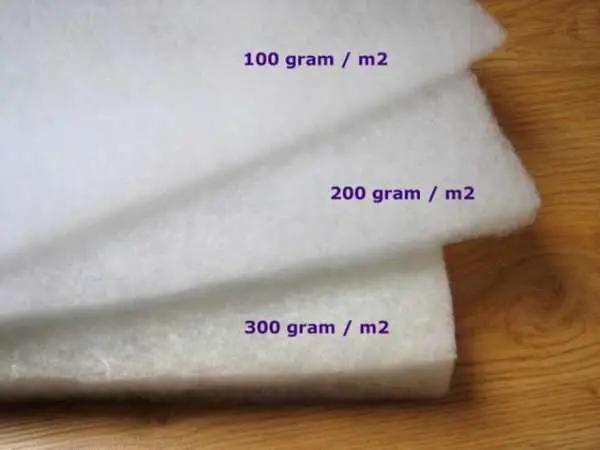
The density of silicone, which is often used as a filler for demi-season and winter jackets and coats, determines the thermal properties of outerwear and its ability to withstand low temperatures, creating comfort.
Why silicone is the best insulation for winter and autumn
Before analyzing the numerical values of density and relating them to the temperature indicators of the environment, it is worth understanding why siliconized insulation is currently the best solution for winter and demi-season jackets and coats.
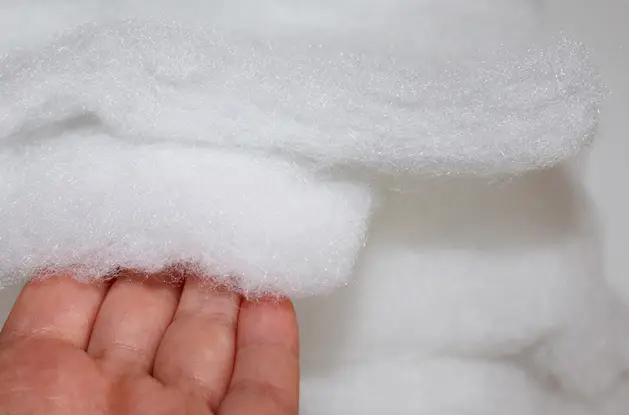
Silicone can be called the closest relative of sintepon, but it is distinguished from the latter by its ability to create the effect of a “thermos” and retain maximum heat. In addition, the siliconized insulation keeps its shape well and does not deform even after repeated washing, which is especially important in children’s overalls and jackets. Thanks to heat-saving and windproof properties, silicone jackets and coats even in density 100 are suitable for fairly low temperatures, and 300 can be used for harsh weather conditions.
For what weather is the density of 100, 150 and 200 g / m² suitable
In search of an answer to the question of what kind of weather is suitable for this or that density of siliconized insulation, it is important to understand that the term “weather” means not only the temperature regime, but also humidity and wind intensity.
Silicone density 100 is suitable for late autumn and winter, when the thermometer does not fall below the -10 ° C mark. If the coat or jacket has a fleece lining, then density 100 will be enough even for windy weather.
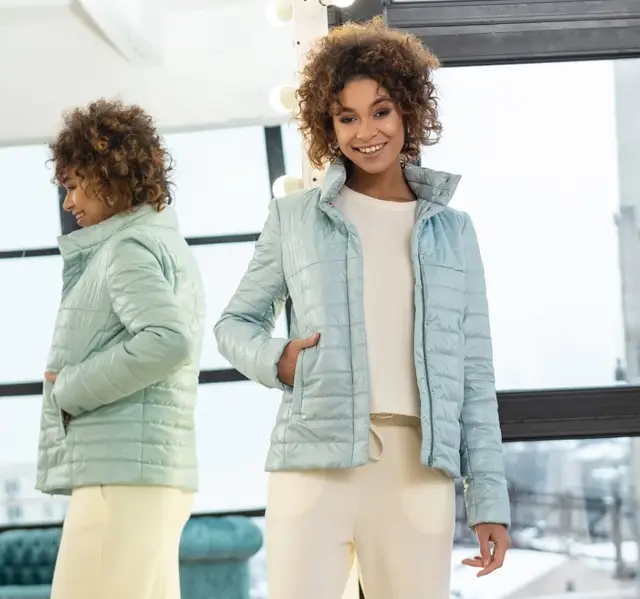
The density of siliconized insulation 150 is relevant in jackets and coats, which are designed for cold autumn and winter with a temperature of up to -15 ° C. The advantage of density 150 is that with high heat-saving properties, things remain quite thin and compact, which is extremely important when it comes to about tourist and sports jackets and overalls. With a short stay on the street, with a dense lining, clothes with silicone insulation 150 will be comfortable even at -20 ° C.
For what weather is the density of 200 g / m² suitable? It would be fair to say that silicone 200 is considered the golden mean in sewing warm winter coats and jackets for middle latitudes. If winter or autumn passes with a temperature of up to -25 ° C, siliconized insulation 200 is what will make even a long stay outside comfortable. If we are talking about children’s clothes, then it is better to choose silicone 250 for this temperature regime, especially if the child is in a stroller.
The use of siliconized insulation 250-300 g / m²
Outerwear with silicone with a density of 250-300 is suitable for the weather, which is characteristic of the winters of the Far North, when the temperature drops to -45-50 ° C. Due to the specifics of use, such coats and jackets have:
- additional layer of warm lining;
- elongated silhouette;
- high collars.
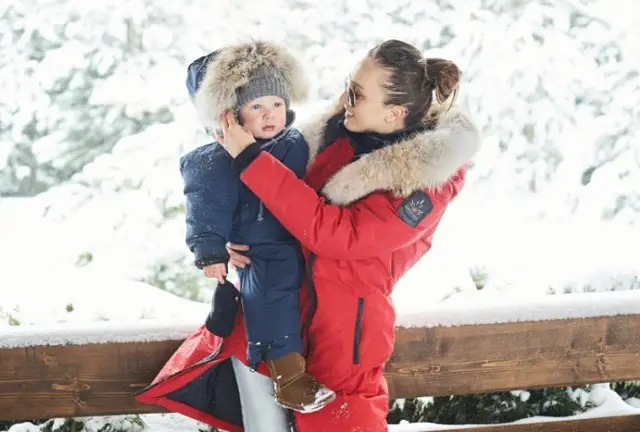
Another direction where silicone with a density of 250-300 is used is the tailoring of clothes for climbers, when not only thermal insulation qualities are important, but also the final weight of the equipment.
You should choose the thickness of the insulation for children’s clothing with particular care, especially if the child is sedentary and is in a stroller. Be guided by a simple rule, if you are comfortable in a jacket with insulation 200, then the child’s clothes should have a filler with a density of 250. This recommendation is relevant for any weather in winter or autumn.